



E-Books →Icons and Iconoclasm in Japanese Buddhism Kukai and Dogen on the Art of Enlightenment
Published by: book79 on 18-05-2025, 07:28 |  0
0
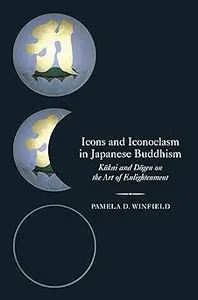
Free Download Pamela D. Winfield, "Icons and Iconoclasm in Japanese Buddhism: Kukai and Dogen on the Art of Enlightenment"
English | ISBN: 0199945551 | 2013 | 207 pages | PDF | 4 MB
Winner of the Association of Asian Studies's Southeast Conference Book Prize (2014)
Does imagery help or hinder the enlightenment experience? Does awakening involve the imagination or not? Can art ever fully represent the realization of buddahood? In this study, Pamela D. Winfield offers a fascinating comparison of two pre-modern Japanese Buddhist masters and their views on the role of imagery in the enlightenment experience. Kukai (774-835) believed that real and imagined forms were indispensable to his new esoteric Mikky? method for "becoming a Buddha in this very body" (sokushin jobutsu), yet he also deconstructed the significance of such imagery in his poetic and doctrinal works. Conversely, Dogen (1200-1253) believed that "just sitting" in Zen meditation without any visual props or mental elaborations could lead one to realize that ''this very mind is Buddha'' (sokushin zebutsu), but he also privileged select Zen icons as worthy of veneration. In considering the nuanced views of both Kukai and Dogen anew, Winfield updates previous comparisons of their oeuvres and engages their texts and images together for the first time. In so doing, she liberates them from past sectarian scholarship that has pigeon-holed them into iconographic/ritual vs. philological/philosophical categories. She also restores the historical symbiosis between religious thought and artistic expression that was lost in the nineteenth-century disciplinary distinction between religious studies and art history. Finally, Winfield breaks new methodological ground by proposing space and time as organizing principles for analyzing both meditative experience and visual/material culture. As a result, this study presents a wider and deeper vision of how Japanese Buddhists themselves understood the role of imagery before, during, and after awakening.
Read more
Buy Premium From My Links To Get Resumable Support,Max Speed & Support Me
Links are Interchangeable - Single Extraction
Help Us Grow – Share, Support
We need your support to keep providing high-quality content and services. Here’s how you can help:
- Share Our Website on Social Media! 📱
Spread the word by sharing our website on your social media profiles. The more people who know about us, the better we can serve you with even more premium content! - Get a Premium Filehost Account from Website! 🚀
Tired of slow download speeds and waiting times? Upgrade to a Premium Filehost Account for faster downloads and priority access. Your purchase helps us maintain the site and continue providing excellent service.
Thank you for your continued support! Together, we can grow and improve the site for everyone. 🌐
Related News
-
{related-news}
Comments (0)

Information
Users of Guests are not allowed to comment this publication.
Search
Updates
Partner
» TutBB
» Byte
» Crawli
» Warezomen
» Warez-DDL
» Raidrush
» KATZCD
» Free Ebooks Library
Your Link Here ?
(Pagerank 4 or above)
» Byte
» Crawli
» Warezomen
» Warez-DDL
» Raidrush
» KATZCD
» Free Ebooks Library
Your Link Here ?
(Pagerank 4 or above)