



E-Books →Dividing Lines How Transportation Infrastructure Reinforces Racial Inequality
Published by: book79 on 15-05-2025, 08:45 |  0
0
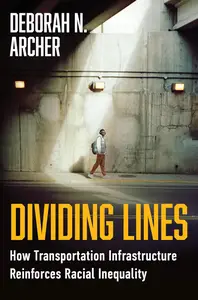
Free Download Dividing Lines: How Transportation Infrastructure Reinforces Racial Inequality by Deborah N. Archer
English | April 15, 2025 | ISBN: 1324092130 | True EPUB | 272 pages | 4.2 MB
From an eminent legal scholar and the president of the ACLU, an essential account of how transportation infrastructure―from highways and roads to sidewalks and buses―became a means of protecting segregation and inequality after the fall of Jim Crow.
Our nation's transportation system is crumbling: highways are collapsing, roads are pockmarked, and commuter trains are unreliable. But as acclaimed scholar and ACLU president Deborah Archer warns in Dividing Lines, before we can think about rebuilding and repairing, we must consider the role race has played in transportation infrastructure, from the early twentieth century and into the present day.
As Archer demonstrates, the success of the Civil Rights movement and the fall of Jim Crow in the 1960s did not mean the end of segregation. The status quo would not be so easily dismantled. With state-sanctioned racism no longer legal, officials across the country―not just in the South―turned to transportation infrastructure to keep Americans divided. A wealthy white neighborhood could no longer be "protected" by racial covenants and segregated shops, but a multilane road, with no pedestrian crossings, could be built along its border to make it difficult for people from a lower-income community to visit. Highways could not be routed through Black neighborhoods based on the race of their residents, but those neighborhoods' lower property values―a legacy of racial exclusion―could justify their destruction. A new suburb could not be for "whites only," but planners could refuse to extend sidewalks from Black communities into white ones.
Drawing on a wealth of sources, including interviews with people who now live in the shadow of highways and other major infrastructure projects, Archer presents a sweeping, national account―from Atlanta and Houston to Indianapolis and New York City―of our persistent divisions. With immense authority, she examines the limits of current Civil Rights laws, which can be used against overtly racist officials but are less effective in addressing deeper, more enduring, structural challenges. But Archer remains hopeful, and in the final count describes what a just system would look like and how we can achieve it.
Buy Premium From My Links To Get Resumable Support,Max Speed & Support Me
Links are Interchangeable - Single Extraction
Help Us Grow – Share, Support
We need your support to keep providing high-quality content and services. Here’s how you can help:
- Share Our Website on Social Media! 📱
Spread the word by sharing our website on your social media profiles. The more people who know about us, the better we can serve you with even more premium content! - Get a Premium Filehost Account from Website! 🚀
Tired of slow download speeds and waiting times? Upgrade to a Premium Filehost Account for faster downloads and priority access. Your purchase helps us maintain the site and continue providing excellent service.
Thank you for your continued support! Together, we can grow and improve the site for everyone. 🌐
Related News
-
{related-news}
Comments (0)

Information
Users of Guests are not allowed to comment this publication.
Search
Updates
Partner
» TutBB
» Byte
» Crawli
» Warezomen
» Warez-DDL
» Raidrush
» KATZCD
» Free Ebooks Library
Your Link Here ?
(Pagerank 4 or above)
» Byte
» Crawli
» Warezomen
» Warez-DDL
» Raidrush
» KATZCD
» Free Ebooks Library
Your Link Here ?
(Pagerank 4 or above)