



E-Books →Spirituality, Gender, and the Self in Renaissance Italy Angela Merici and the Company of St. Ursula (1474–1540)
Published by: book79 on 8-03-2025, 14:26 |  0
0
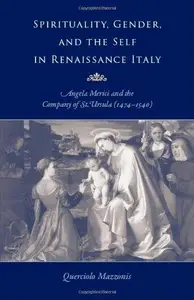
Free Download Spirituality, Gender, and the Self in Renaissance Italy: Angela Merici and the Company of St. Ursula (1474-1540) By Querciolo Mazzonis
2007 | 247 Pages | ISBN: 0813214904 | PDF | 1 MB
Angela Merici (1474-1540), like other mystic women such as Catherine of Siena, was considered a "santa viva"-a living saint-by virtue of her mysticism, sacred knowledge, human qualities, and participation in civic life. However, Angela's originality and genius reside above all in the foundation of the Company of St. Ursula. It is there that she put her theology into practice and translated her spiritual ideas and experience into a defined model of religious life for women. Spirituality, Gender, and the Self in Renaissance Italy places St. Angela Merici and her Company of St. Ursula in historical and religious context and examines them from a variety of perspectives: institutional, social, spiritual, and cultural. By analyzing Merici's spirituality, the book contributes to two fields of research that have been particularly rich and contentious: women's religious life and early modern Catholicism. The Company of St. Ursula, long mistaken for a charitable or educational confraternity, proposed a form of consecration for women outside the convent, similar to that lived by late medieval women such as the beguines and the tertiaries. Merici's ideal of spiritual life-inward-looking, a-institutional, democratic, public, and transcendent-codified into a religious rule the "irregular" features of the female approach to the sacred. It offered women the possibility of living beyond the limits imposed on them. Furthermore, Merici's spirituality is compared with a vast array of religious practices promoted by important religious thinkers of her time, such as Battista da Crema, Erasmus of Rotterdam, and Ignatius Loyola. The book seeks to understand the historical significance of spirituality by linking religious models with relevant aspects of Renaissance society and culture. In particular, the author examines the forms of relationship with God and perfection in relation to a Renaissance notion of the "self" and in connection with gender concepts. Methodologically, the application of historical, literary, cultural, and anthropological concepts to the subject leads to a rich cross-fertilization of theoretical approaches.
Buy Premium From My Links To Get Resumable Support,Max Speed & Support Me
Links are Interchangeable - Single Extraction
Help Us Grow – Share, Support
We need your support to keep providing high-quality content and services. Here’s how you can help:
- Share Our Website on Social Media! 📱
Spread the word by sharing our website on your social media profiles. The more people who know about us, the better we can serve you with even more premium content! - Get a Premium Filehost Account from Website! 🚀
Tired of slow download speeds and waiting times? Upgrade to a Premium Filehost Account for faster downloads and priority access. Your purchase helps us maintain the site and continue providing excellent service.
Thank you for your continued support! Together, we can grow and improve the site for everyone. 🌐
Related News
-
{related-news}
Comments (0)

Information
Users of Guests are not allowed to comment this publication.
Search
Updates
Partner
» TutBB
» Byte
» Crawli
» Warezomen
» Warez-DDL
» Raidrush
» KATZCD
» Free Ebooks Library
Your Link Here ?
(Pagerank 4 or above)
» Byte
» Crawli
» Warezomen
» Warez-DDL
» Raidrush
» KATZCD
» Free Ebooks Library
Your Link Here ?
(Pagerank 4 or above)