



E-Books →PIPAC Pressurized IntraPeritoneal Aerosol Chemotherapy – Cancer under Pressure
Published by: book79 on 3-03-2025, 15:56 |  0
0
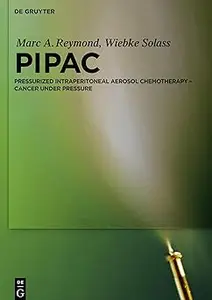
Free Download Marc A. Reymond, "PIPAC: Pressurized IntraPeritoneal Aerosol Chemotherapy - Cancer under Pressure "
English | ISBN: 3110345943 | 2014 | 252 pages | EPUB | 3 MB
Peritoneal dissemination is a common route of cancer metastasis. The benefit of administering chemotherapy directly into the peritoneal cavity is supported by preclinical and pharmacokinetic data. In comparison to intravenous (IV) treatment, intraperitoneal (IP) administration results in a several-fold increase in drug concentration within the abdominal cavity. There is now growing evidence from clinical studies showing a survival advantage for IP chemotherapy in various tumor typies, including ovarian, gastric and colorectal cancer.
However, while the use of IP chemotherapy is slowly gaining acceptance, it is not universal, largely due to the greater toxicity associated with this approach. Moreover, efficacy of IP chemotherapy is limited by poor distribution within the abdominal cavity and by poor tissue penetration.
A new way of IP chemotherapy is the application of cytotoxics in form of a pressurized aerosol into the abdominal of thoracic cavity. Pressurized intraperitoneal aerosol chemotherapy (PIPAC) is applied through laparoscopic access using two balloon trocars in an operating room equipped with laminar air-flow. In a first step,a normothermic capnoperitoneum is established with a pressure of 12 mmHg. A cytotoxic solution (about 10% of a normal systemic dose) is nebulized with a micropump into the abdominal cavity, and maintained for 30 min. The aerosol is then removed through a closed suction system.
Applying an aerosol in the peritoneal cavity allows a homogeneous distribution of the chemotherapeutic agent within the abdomen. Furthermore, an artificial pressure gradient is generated that overcomes tumoral interstitial fluid pressure, an obstacle in cancer therapy. This results in a higher local drug concentration compared to conventional IP or IV chemotherapy. At the same time the plasma concentration of the chemotherapeutic agent remains low.
In first clinical studies with limited number of patients in ovarian, gastric and colorectal cancer, as well as peritoneal mesothelioma, PIPAC has obtained encouraging tumor response rates and survival, with a low-side effects profile. Larger clinical trials are currently ongoing to examine if these data can be reproduced and extrapolated to other situations.
Read more
Buy Premium From My Links To Get Resumable Support,Max Speed & Support Me
Links are Interchangeable - Single Extraction
Help Us Grow – Share, Support
We need your support to keep providing high-quality content and services. Here’s how you can help:
- Share Our Website on Social Media! 📱
Spread the word by sharing our website on your social media profiles. The more people who know about us, the better we can serve you with even more premium content! - Get a Premium Filehost Account from Website! 🚀
Tired of slow download speeds and waiting times? Upgrade to a Premium Filehost Account for faster downloads and priority access. Your purchase helps us maintain the site and continue providing excellent service.
Thank you for your continued support! Together, we can grow and improve the site for everyone. 🌐
Related News
-
{related-news}
Comments (0)

Information
Users of Guests are not allowed to comment this publication.
Search
Updates
Partner
» TutBB
» Byte
» Crawli
» Warezomen
» Warez-DDL
» Raidrush
» KATZCD
» Free Ebooks Library
Your Link Here ?
(Pagerank 4 or above)
» Byte
» Crawli
» Warezomen
» Warez-DDL
» Raidrush
» KATZCD
» Free Ebooks Library
Your Link Here ?
(Pagerank 4 or above)