



E-Books →The Deadliest Massacres of the Indian Wars
Published by: book79 on 26-02-2025, 15:57 |  0
0
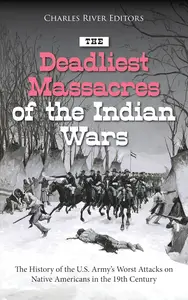
Free Download The Deadliest Massacres of the Indian Wars: The History of the U.S. Army's Worst Attacks on Native Americans in the 19th Century by Charles River Editors
English | November 24, 2024 | ISBN: N/A | ASIN: B0DP1DFVDX | 185 pages | EPUB | 14 Mb
From the "Trail of Tears" to Wounded Knee and Little Bighorn, the narrative of American history is incomplete without the inclusion of the Native Americans that lived on the continent before European settlers arrived in the 16th and 17th centuries. Since the first contact between natives and settlers, tribes like the Sioux, Cherokee, and Navajo have both fascinated and perplexed outsiders with their history, language, and culture.
The Shoshone are still remembered for assisting the Lewis & Clark expedition, especially Sacagawea, and they maintained contact with Americans throughout the 19th century, but unfortunately, the cooperation gave way to conflict as white settlers began to move westward and enter onto lands occupied by the Shoshone. In 1862, California officials sent the Third California Volunteer Infantry under the command of Colonel Patrick Connor to construct a fort (Fort Douglas) in the foothills of the Wasatch Mountains above Salt Lake City, in an effort to keep lines of communication open so pioneers would not be hesitant about settling in the region. Meanwhile, Shoshone Chief Bear Hunter (Wirasuap) led his band on raids against mining camps and Mormon settlements. In January 1863, Colonel Connor led 300 volunteers out of the newly completed Fort Douglas through 140 miles of bitter cold to reach Chief Bear Hunter's camp on the eastern shore of the Great Salt Lake, culminating in what would become known as the Bear River Massacre at Preston, Idaho. During the fighting, Connor's men trapped and killed an estimated 350-500 Northwestern Shoshone, including women, children, and the elderly.
On the morning of November 29, 1864, Colonel John Chivington led 700 militiamen in a surprise attack against Cheyenne leader Black Kettle's camp at Sand Creek. Chivington was a fire and brimstone Methodist minister who had publicly advocated indiscriminately killing Native American children because "nits makes lice." Warning his men ahead of battle, Chivington stated, "Damn any man who sympathizes with Indians! I have come to kill Indians and believe it is right and honorable to use any means under God's heaven to kill Indians!" According to Cheyenne oral tradition and several surviving soldiers' accounts, as soon as Black Kettle saw Chivington's men coming, he raised an American flag on a pole and waved it back and forth calling out that his Wutapai band was not resisting. Ignoring his cries for mercy, the soldiers commenced firing, cutting down an estimated 70-200 Cheyenne, about two-thirds of whom were women and children. Black Kettle managed to escape the slaughter, only to be killed during George Custer's unprovoked attack at Washita River in 1868, but Cheyenne leader White Antelope was killed and his body was mutilated.
Among all the events in the strained relations between the U.S. government and Native Americans during the 19th century, the most notorious and defining one was what is today called the Wounded Knee Massacre. Technically, it was the last armed engagement between Sioux warriors and the U.S. military, and it marked the end of effective resistance by any Sioux bands, but what actually occurred is far more controversial. In late December 1890, a group of roughly 350 Lakota Sioux led by Big Foot and Spotted Elk were escorted to the Wounded Knee Creek area and ordered to establish a camp there, but fearing another possible uprising despite the fact the band was comprised mostly of women, about 500 U.S. Army troops from the 7th Cavalry Regiment, led by Major Samuel M. Whitside, approached the Lakota encampment on the morning of December 29 with orders to disarm and escort the Native Americans to a railhead for transport to Omaha, Nebraska. Some of the men in the 7th Cavalry had also been part of the 7th Cavalry at Little Bighorn, so there could not have been a worse command to send on a mission that required interacting with the Lakota.
Buy Premium From My Links To Get Resumable Support,Max Speed & Support Me
Links are Interchangeable - Single Extraction
Help Us Grow – Share, Support
We need your support to keep providing high-quality content and services. Here’s how you can help:
- Share Our Website on Social Media! 📱
Spread the word by sharing our website on your social media profiles. The more people who know about us, the better we can serve you with even more premium content! - Get a Premium Filehost Account from Website! 🚀
Tired of slow download speeds and waiting times? Upgrade to a Premium Filehost Account for faster downloads and priority access. Your purchase helps us maintain the site and continue providing excellent service.
Thank you for your continued support! Together, we can grow and improve the site for everyone. 🌐
Related News
-
{related-news}
Comments (0)

Information
Users of Guests are not allowed to comment this publication.
Search
Updates
Partner
» TutBB
» Byte
» Crawli
» Warezomen
» Warez-DDL
» Raidrush
» KATZCD
» Free Ebooks Library
Your Link Here ?
(Pagerank 4 or above)
» Byte
» Crawli
» Warezomen
» Warez-DDL
» Raidrush
» KATZCD
» Free Ebooks Library
Your Link Here ?
(Pagerank 4 or above)