



E-Books →Knowledge Generation and Technical Change Institutional Innovation in Agriculture
Published by: book79 on 13-11-2024, 22:21 |  0
0
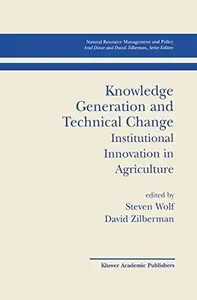
Free Download Knowledge Generation and Technical Change: Institutional Innovation in Agriculture By Henry Etzkowitz (auth.), Steven A. Wolf, David Zilberman (eds.)
2001 | 371 Pages | ISBN: 1461355842 | PDF | 15 MB
Knowledge generation and transfer mechanisms are being transformed in important and controversial ways. Investment in research and development has increased in response to recognition that scientific productivity is tightly connected to economic dynamism. Patent protection has been expanded in order to stimulate higher levels of private investment. Intellectual property rights held by public organizations and researchers are now increasingly transferred to private organizations to accelerate the diffusion and enhance the value of knowledge produced by public agencies and universities. Additionally, new institutions such as university offices of technology transfer, venture capital markets, and a variety of consortia in knowledge-intensive industries are being established throughout the United States and in other parts of the world. These changes have led to a repositioning of the state in systems of innovation and an increase in the proprietary character of technical information. The purpose of this book is to review and analyze i) contemporary transitions in agricultural knowledge generation and extension arrangements from an empirical perspective, and ii) emerging and contradictory perspectives as to how knowledge systems can be assessed effectively. The authors aim to provide the reader with a better understanding of the implications of new biotechnologies and new intellectual property rights regimes on public-private relations in science, the extent to which benefits from scientific knowledge are being appropriated by private sector actors, the diversity and possible outcomes of privatization initiatives in extension, and prospects for public goods production and ecological sustainability given contemporary trends. The book presents contrasting views on the degree of complementarity and substitution between private and public sector investments in research and extension. Recognizing that the labels `public' and `private' are incomplete and at times misleading descriptions of the structure and function of coordinating bodies in social systems, the analyses highlight ways in which public and private spaces and modes of functioning combine. In addition to illustrating a broad range of analytic methodologies useful for studying organizational questions in knowledge systems, the authors identify the implications of a range of past and potential institutional innovations.
Buy Premium From My Links To Get Resumable Support,Max Speed & Support Me
Links are Interchangeable - Single Extraction
Help Us Grow – Share, Support
We need your support to keep providing high-quality content and services. Here’s how you can help:
- Share Our Website on Social Media! 📱
Spread the word by sharing our website on your social media profiles. The more people who know about us, the better we can serve you with even more premium content! - Get a Premium Filehost Account from Website! 🚀
Tired of slow download speeds and waiting times? Upgrade to a Premium Filehost Account for faster downloads and priority access. Your purchase helps us maintain the site and continue providing excellent service.
Thank you for your continued support! Together, we can grow and improve the site for everyone. 🌐
Related News
-
{related-news}
Comments (0)

Information
Users of Guests are not allowed to comment this publication.
Search
Updates
Partner
» TutBB
» Byte
» Crawli
» Warezomen
» Warez-DDL
» Raidrush
» KATZCD
» Free Ebooks Library
Your Link Here ?
(Pagerank 4 or above)
» Byte
» Crawli
» Warezomen
» Warez-DDL
» Raidrush
» KATZCD
» Free Ebooks Library
Your Link Here ?
(Pagerank 4 or above)