



E-Books →The NSTA Atlas of the Three Dimensions
Published by: book79 on 11-11-2024, 15:55 |  0
0
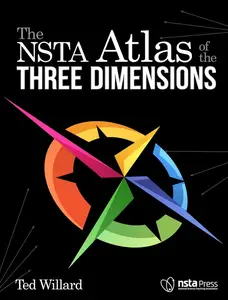
Free Download The NSTA Atlas of the Three Dimensions by Ted Willard
English | May 1, 2020 | ISBN: 1938946081 | 225 pages | MOBI | 62 Mb
A key aspect of learning in K- 12 education is the idea that what students know and are able to do grows and evolves over time. Simple ideas learned in the early elementary grades gain levels of detail and complexity as students progress in their education. Connections between different topics and disciplines are made.
Therefore, a key feature of setting standards for students is to describe learning progressions. Simply put, a learning progression is an articulation of the " steps along the way" that a student might go through as he or she works toward mastery of something. Although one path does not apply to all students, some paths are more common than others.
A Framework for K- 12 Science Education (the Framework) provides specific grade-band endpoints for the disciplinary core ideas and describes progressions for the science and engineering practices and crosscutting concepts. The Next Generation Science Standards (NGSS) and other standards based on the Framework contain tables of progressions for all three dimensions.
What' s missing is a way to illustrate these connections. That' s where The NSTA Atlas of the Three Dimensions comes in. It' s your user-friendly guide to understanding how ideas build on one other and relate to each other. With the NSTA Atlas, you' ll be able to trace the prerequisites for understanding science in every grade, make the appropriate connections to support science content, and show the way to the next steps in your students' science education- all in the context of today' s standards.
The 62 maps in the NSTA Atlas organize all of the elements from the standards on a particular topic (e.g., modeling, patterns, or definitions of energy) on a single page. The elements from grades K- 2 are at the bottom of the page, and those from grades 9- 12 are at the top. Arrows connect elements to indicate how ideas in a particular topic build on each other and how elements in different topics connect to one another. Because the maps prompt you to think about ways student learning can build over time, the NSTA Atlas is useful even if you teach in a state that hasn' t adopted the NGSS.
By studying the maps in the NSTA Atlas and the additional resources in the appendixes, you' ll gain new insights about the standards and have a powerful navigational tool to help you plan your curriculum, instruction, and assessment.
Feel Free to contact me for book requests, informations or feedbacks.
[b]Buy Premium From My Links To Get Resumable Support,Max Speed & Support Me
Links are Interchangeable - Single Extraction
Help Us Grow – Share, Support
We need your support to keep providing high-quality content and services. Here’s how you can help:
- Share Our Website on Social Media! 📱
Spread the word by sharing our website on your social media profiles. The more people who know about us, the better we can serve you with even more premium content! - Get a Premium Filehost Account from Website! 🚀
Tired of slow download speeds and waiting times? Upgrade to a Premium Filehost Account for faster downloads and priority access. Your purchase helps us maintain the site and continue providing excellent service.
Thank you for your continued support! Together, we can grow and improve the site for everyone. 🌐
Related News
-
{related-news}
Comments (0)

Information
Users of Guests are not allowed to comment this publication.
Search
Updates
Partner
» TutBB
» Byte
» Crawli
» Warezomen
» Warez-DDL
» Raidrush
» KATZCD
» Free Ebooks Library
Your Link Here ?
(Pagerank 4 or above)
» Byte
» Crawli
» Warezomen
» Warez-DDL
» Raidrush
» KATZCD
» Free Ebooks Library
Your Link Here ?
(Pagerank 4 or above)