



E-Books →Iron Age and Roman Settlement at Highflyer Farm, Ely, Cambridgeshire
Published by: book79 on 10-11-2024, 00:06 |  0
0
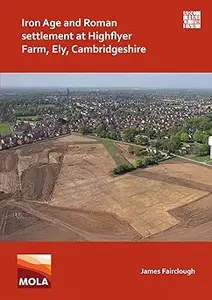
Free Download James Fairclough, "Iron Age and Roman Settlement at Highflyer Farm, Ely, Cambridgeshire"
English | ISBN: 1789698421 | 2021 | 154 pages | PDF | 48 MB
Iron Age and Roman settlement at Highflyer Farm, Ely, Cambridgeshire presents the results of archaeological work carried out by MOLA (Museum of London Archaeology) at Highflyer Farm in 2018. Remains dating from the Neolithic to the post-medieval period were recorded, with most of the activity occurring between the early Iron Age and late Roman periods. Excavations in 2000 at Prickwillow Road, undertaken directly to the south of Highflyer Farm, had recorded the southern extent of this Iron Age to Roman settlement. Two features, a pit and a posthole, were dated to the late Neolithic to early Bronze Age. In the 5th to 4th centuries BC a small open early Iron Age settlement was established and was at the lower end of the settlement hierarchy, perhaps occupied by a single family or a seasonal group. In the middle Iron Age, there was a well-planned linear settlement split into three main sections, which consisted of a similar large rounded enclosure at its northern and southern extent, both probably domestic. A complex sub-rectangular arrangement of enclosures and boundaries lay within the centre, a roughly equal distance apart from the circular enclosures. In the late Iron Age and then the early Roman periods, a significant reorganisation of the site occurred with successive enclosures and rectilinear field systems established. In the middle Roman period, the settlement was reorganised around three routeways with two distinct areas of linked paddocks and compartmentalised enclosures. There were three probable different separate areas of domestic activity, including a rectangular posthole structure centrally located in the main enclosure system. It is possible that there was significant export and trade of livestock occurring from this relatively wealthy settlement with cattle dominating. The routeway system continued into the later Roman period though the number of enclosures reduced. On balance, it is more likely the Roman settlement finished in the late 4th century, but an early 5th-century date should not be ruled out. Post-Roman activity was sparser, with a single sunken feature building identified as well as a waterhole and a few other features dated to the 5th and/or 6th century. Includes contributions by Sander Aerts, Rob Atkins, Paul Blinkhorn, Andy Chapman, Chris Chinnock, Nina Crummy, Mary Ellen Crothers, Rebecca Gordon, Tora Hylton, Sarah Percival, Adam Sutton and Yvonne Wolframm-Murray. Illustrations by Sofia Turk.
Read more
Buy Premium From My Links To Get Resumable Support,Max Speed & Support Me
Links are Interchangeable - Single Extraction
Help Us Grow – Share, Support
We need your support to keep providing high-quality content and services. Here’s how you can help:
- Share Our Website on Social Media! 📱
Spread the word by sharing our website on your social media profiles. The more people who know about us, the better we can serve you with even more premium content! - Get a Premium Filehost Account from Website! 🚀
Tired of slow download speeds and waiting times? Upgrade to a Premium Filehost Account for faster downloads and priority access. Your purchase helps us maintain the site and continue providing excellent service.
Thank you for your continued support! Together, we can grow and improve the site for everyone. 🌐
Related News
-
{related-news}
Comments (0)

Information
Users of Guests are not allowed to comment this publication.
Search
Updates
Partner
» TutBB
» Byte
» Crawli
» Warezomen
» Warez-DDL
» Raidrush
» KATZCD
» Free Ebooks Library
Your Link Here ?
(Pagerank 4 or above)
» Byte
» Crawli
» Warezomen
» Warez-DDL
» Raidrush
» KATZCD
» Free Ebooks Library
Your Link Here ?
(Pagerank 4 or above)