



E-Books →The Stanford Prison Experiment
Published by: book79 on 29-09-2024, 10:19 |  0
0
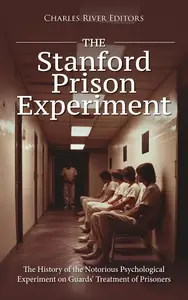
Free Download The Stanford Prison Experiment: The History of the Notorious Psychological Experiment on Guards' Treatment of Prisoners by Charles River Editors
English | August 18, 2024 | ISBN: N/A | ASIN: B0DDLDCTN7 | 45 pages | EPUB | 1.13 Mb
What happens when you put good people in a bad place?
That was the question that an experiment in 1971 set out to answer when Stanford University professor and psychologist Philip Zimbardo used funding provided by the U.S. Office of Naval Research to create a make-believe prison in the basement of a university building. Male students were offered the chance to take part in the two-week experiment (and to make $15 per day). All applicants were carefully screened to ensure that they were healthy, emotionally and psychologically stable. 24 men were selected out of 75 that had applied. These men were then randomly assigned to play the role of either prisoners or guards in the "prison."
Initially, nobody was particularly concerned: after all, these were stable, intelligent young men who understood that they would be playing a role for just two weeks. Some people even considered that the experiment was pointless because everyone involved knew that they were simply acting roles for a limited time, so they couldn't be expected to behave in the ways that real prisoners and guards did.
Nonetheless, the experiment began on August 15th, 1971, and just six days later, on August 20th, it was abruptly and unexpectedly terminated after the "guards" had become brutal and sadistic and the "prisoners" had become withdrawn, fearful, and apathetic. There were real concerns that someone might end up being seriously hurt or suffer long-term psychological damage.
How could a group of nice, healthy, intelligent young men suddenly transform into sadistic thugs? How could another equally intelligent group of young men suddenly become apathetic victims of this brutality? What did this say about the malleability of human behavior, even when everyone involved knew that this wasn't real?
The Stanford Prison Experiment has become a classic in psychology, but its results were so startling that they received much wider interest from people trying to understand the nature of good and evil. If you put a good person in a bad place, perhaps the outcome will also inevitably be bad? That was the conclusion that Phillip Zimbardo drew from the experiment, but not everyone accepted this, and some even believed that Zimbardo had rigged the experiment to make the outcome as dramatic as possible. These doubts have ensured that although this has become one of the best-known psychological experiments ever, it isn't mentioned in many psychological textbooks and some people refuse to teach it because of concerns about its honesty.
Buy Premium From My Links To Get Resumable Support,Max Speed & Support Me
Links are Interchangeable - Single Extraction
Help Us Grow – Share, Support
We need your support to keep providing high-quality content and services. Here’s how you can help:
- Share Our Website on Social Media! 📱
Spread the word by sharing our website on your social media profiles. The more people who know about us, the better we can serve you with even more premium content! - Get a Premium Filehost Account from Website! 🚀
Tired of slow download speeds and waiting times? Upgrade to a Premium Filehost Account for faster downloads and priority access. Your purchase helps us maintain the site and continue providing excellent service.
Thank you for your continued support! Together, we can grow and improve the site for everyone. 🌐
Related News
-
{related-news}
Comments (0)

Information
Users of Guests are not allowed to comment this publication.
Search
Updates
Partner
» TutBB
» Byte
» Crawli
» Warezomen
» Warez-DDL
» Raidrush
» KATZCD
» Free Ebooks Library
Your Link Here ?
(Pagerank 4 or above)
» Byte
» Crawli
» Warezomen
» Warez-DDL
» Raidrush
» KATZCD
» Free Ebooks Library
Your Link Here ?
(Pagerank 4 or above)