



E-Books →Political, Economic and Financial Country Risk Analysis of the Gulf Cooperation Council
Published by: book79 on 16-09-2024, 10:03 |  0
0
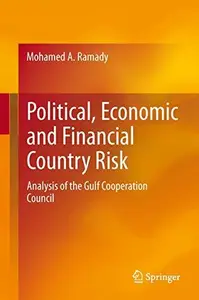
Free Download Political, Economic and Financial Country Risk: Analysis of the Gulf Cooperation Council By Mohamed A. Ramady (auth.)
2014 | 281 Pages | ISBN: 3319021761 | PDF | 4 MB
"Decades go by and nothing happens; then weeks go by and decades happen". This apt saying encapsulates the dramatic convulsions taking place across the Arab world that first erupted in 2011 in Tunisia and which rapidly spread to other countries. These events have affected the lives of ordinary citizens in many more ways than had been intended when the 'Arab Spring' broke out, with the endgame still not very clear as demonstrated in countries like Egypt, Syria and Libya.By comparison, with some exceptions, the six countries comprising the Gulf Cooperation Council have been relatively unaffected by the general turbulence and uncertainties lapping around them. However, geopolitical shifts involving global superpower rivalries, combined with revolutionary breakthroughs in the non-conventional hydrocarbon energy sector are threatening to challenge the importance of the Arabian Gulf as the world's leading suppliers of energy, putting their economies under fiscal stress. The author examines such challenges by: * Providing the first in-depth statistical analytical assessment of the GCC countries using monthly data over the period 2001 -2013 for the three risk categories- economic, financial and political risks- and their sub -components so as to enable policymakers enhance components with low risk , while addressing components with perceived higher risk,* Assessing FDI and capital inflows and outflows before and after the "Arab Spring" , and how to encourage FDI inflows, * Inter -Arab and GCC trade and synergies in power transmission , transportation links and establishing new hubs of centers of manufacturing excellence , * Exploring private sector-led growth models to reduce forecasted unemployment. Being complacent is not an option for the GCC. The aim of the book is that having a better understanding of each of the GCC countries' individual risk parameters will enable the GCC meet future challenges and reduce the chances of a negative 'Arab Spring' occurring in the region. Mohamed Ramady is a Visiting Associate Professor at the Department of Finance and Economics, King Fahd University of Petroleum and Minerals. His main research interests are the economics of the Middle East and Saudi Arabia in particular, as well as money and banking He also held senior positions with international financial institutions in the Arabian Gulf and Europe.
Buy Premium From My Links To Get Resumable Support,Max Speed & Support Me
Links are Interchangeable - Single Extraction
Help Us Grow – Share, Support
We need your support to keep providing high-quality content and services. Here’s how you can help:
- Share Our Website on Social Media! 📱
Spread the word by sharing our website on your social media profiles. The more people who know about us, the better we can serve you with even more premium content! - Get a Premium Filehost Account from Website! 🚀
Tired of slow download speeds and waiting times? Upgrade to a Premium Filehost Account for faster downloads and priority access. Your purchase helps us maintain the site and continue providing excellent service.
Thank you for your continued support! Together, we can grow and improve the site for everyone. 🌐
Related News
-
{related-news}
Comments (0)

Information
Users of Guests are not allowed to comment this publication.
Search
Updates
Partner
» TutBB
» Byte
» Crawli
» Warezomen
» Warez-DDL
» Raidrush
» KATZCD
» Free Ebooks Library
Your Link Here ?
(Pagerank 4 or above)
» Byte
» Crawli
» Warezomen
» Warez-DDL
» Raidrush
» KATZCD
» Free Ebooks Library
Your Link Here ?
(Pagerank 4 or above)