



E-Books →Selfish Gifts The Politics of Exchange And English Courtly Literature, 1580–1628
Published by: book79 on 12-09-2024, 20:00 |  0
0
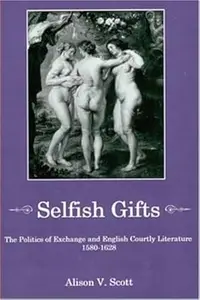
Free Download Alison V. Scott, "Selfish Gifts: The Politics of Exchange And English Courtly Literature, 1580-1628"
English | 2005 | pages: 304 | ISBN: 0838640826, 1611473187 | PDF | 1,1 mb
Engaging with a wide range of texts on gift-theory, extending from Senecas De Beneficiis to Derridas Given Time, Selfish Gifts examines the importance of gift ethics and the rhetoric of honorable giving to the literature of late Elizabeth and early Stuart England. It demonstrates that the ideal of the freely given and disinterested gift shaped the language of early modern clientage, along with literary representations of patrons and patronage systems during this period. Selfish Gifts examines how early modern clients moved quickly and strategically to assimilate the language of competition and equality, characteristic of an emerging market economy, within their existing discourses of gift exchange, in order to maximize the rewards they might induce from an increasingly diverse group of patrons.
To give is to exercise power and thus, as numerous modern gift-theorists and anthropologists elucidate, the gift is implicitly self-interested even as it derives value from appearing altruistic; nowhere is this paradox more significant than in a patronage economy such as that which shaped literary production in early modern England. In pursuing that paradox and its implications, Selfish Gifts highlights crucial connections and cultural tensions between political and sexual giving, between 'giving' truth and flattery, between the sovereignty and subjection of gift donor/recipient, and between strategic and so-called 'sacrificial' giving. Those tensions are examined in the context of the latter years of Elizabeth Is rule, through the contrasting reign of James I and up to the early Caroline period.
Selfish Gifts demonstrates the prominence of the gift ideal in Renaissance England and suggests the disturbing social and political consequences for those who give contrary to that ideal by bestowing self-interested gifts, by refusing to give, or by giving egotistically. The book establishes the centrality of gift theory to the discourses of patronage, friendship, and sovereignty, suggesting
Buy Premium From My Links To Get Resumable Support,Max Speed & Support Me
Links are Interchangeable - Single Extraction
Help Us Grow – Share, Support
We need your support to keep providing high-quality content and services. Here’s how you can help:
- Share Our Website on Social Media! 📱
Spread the word by sharing our website on your social media profiles. The more people who know about us, the better we can serve you with even more premium content! - Get a Premium Filehost Account from Website! 🚀
Tired of slow download speeds and waiting times? Upgrade to a Premium Filehost Account for faster downloads and priority access. Your purchase helps us maintain the site and continue providing excellent service.
Thank you for your continued support! Together, we can grow and improve the site for everyone. 🌐
Related News
-
{related-news}
Comments (0)

Information
Users of Guests are not allowed to comment this publication.
Search
Updates
Partner
» TutBB
» Byte
» Crawli
» Warezomen
» Warez-DDL
» Raidrush
» KATZCD
» Free Ebooks Library
Your Link Here ?
(Pagerank 4 or above)
» Byte
» Crawli
» Warezomen
» Warez-DDL
» Raidrush
» KATZCD
» Free Ebooks Library
Your Link Here ?
(Pagerank 4 or above)