



E-Books →Rational Decisions in Organisations Theoretical and Practical Aspects
Published by: Baturi on 21-06-2022, 13:27 |  0
0
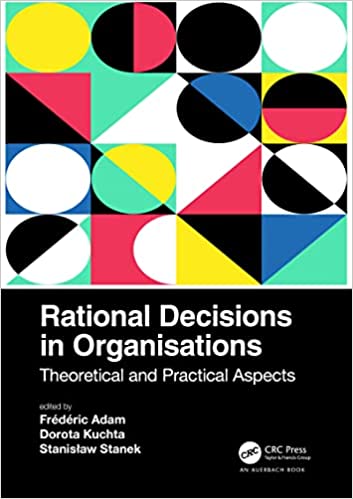
English | 2022 | ISBN: 0367467747 | 247 pages | True PDF | 9.26 MB
Managers in organisations must make rational decisions. Rational decision making is the opposite of intuitive decision making. It is a strict procedure utilising objective knowledge and logic. It involves identifying the problem to solve, gathering facts, identifying options and outcomes, analysing them, considering all the relationships and selecting the decision.
Rational decision making requires support: methods and software tools. The identification of the problem to solve needs methods that would measure and evaluate the current situation. Identification and evaluation of options and analysis of the available possibilities involves analysis and optimisation methods. Incorporating intuition into rational decision making needs adequate methods that would translate ideas or observed behaviours into hard data. Communication, observation and opinions recording is hardly possible today without adequate software. Information and data that form the input, intermediate variables and the output must be stored, managed and made accessible in a user-friendly manner.
Rational Decisions in Organisations: Theoretical and Practical Aspects presents selected recent developments in the support of the widely understood rational decision making in organisations, illustrated through case studies. The book shows not only the variety of perspectives involved in decision making, but also the variety of domains where rational decision support systems are needed. The case studies present decision making by medical doctors, students and managers of various universities, IT project teams, construction companies, banks and small and large manufacturing companies.
Covering the richness of relationships in which the decisions should and must be taken, the book illustrates how modern organisations operate in chains and networks; they have multiple responsibilities, including social, legal, business and ethical duties. Nowadays, managers in organisations can make transparent decisions and consider a multitude of stakeholders and their diverse features, incorporating diverse criteria, using multiple types and drivers of information and decision-making patterns, and referring to numerous lessons learned. As the book makes clear, the marriage of theoretical ideas with the possibilities offered by technology can make the decisions in organisations more rational and, at the same time, more human.




Links are Interchangeable - No Password - Single Extraction
Help Us Grow – Share, Support
We need your support to keep providing high-quality content and services. Here’s how you can help:
- Share Our Website on Social Media! 📱
Spread the word by sharing our website on your social media profiles. The more people who know about us, the better we can serve you with even more premium content! - Get a Premium Filehost Account from Website! 🚀
Tired of slow download speeds and waiting times? Upgrade to a Premium Filehost Account for faster downloads and priority access. Your purchase helps us maintain the site and continue providing excellent service.
Thank you for your continued support! Together, we can grow and improve the site for everyone. 🌐
Related News
-
{related-news}
Comments (0)

Information
Users of Guests are not allowed to comment this publication.
Search
Updates
Partner
» TutBB
» Byte
» Crawli
» Warezomen
» Warez-DDL
» Raidrush
» KATZCD
» Free Ebooks Library
Your Link Here ?
(Pagerank 4 or above)
» Byte
» Crawli
» Warezomen
» Warez-DDL
» Raidrush
» KATZCD
» Free Ebooks Library
Your Link Here ?
(Pagerank 4 or above)