



E-Books →Drifting through Samsara Tacit Conversion and Disengagement in Goenka's Vipassana Movement
Published by: Baturi on 18-03-2022, 18:58 |  0
0
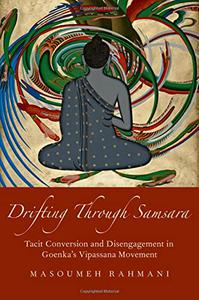
Drifting through Samsara: Tacit Conversion and Disengagement in Goenka's Vipassana Movement by Masoumeh Rahmani
English | December 21, 2021 | ISBN: 0197579965 | 264 pages | PDF | 3 MB
In Drifting Through Samsara, Masoumeh Rahmani provides a fieldwork-based study of Goenka's Vipassana meditation movement in New Zealand. This group is distinguished by its refusal to identify as Buddhist and by a rich rhetorical repertoire for repackaging Theravada Buddhist teachings in
pseudo-scientific and secular language. Drawing from qualitative research, the book examines the way the movement's discourse shapes unique processes and narratives of conversion and disengagement. Rahmani argues that conversion to this movement is tacit and paradoxically results in the members'
rejection of religious labels and categories including conversion. Tracing the linguistic changes associated with the process of conversion and increased commitment, she outlines three main disengagement pathways: (1) pragmatic leaving, (2) disaffiliation, and (3) deconversion. Pragmatic leavers are
individuals who were disengaged prior to developing a commitment. Rahmani argues that the language of these leavers is characterised by pragmatisms, dualistic discourse, and ambivalence, and their post-disengagement involves an active gravitation towards practices with easily accomplished goals.
Disaffiliates and deconverts are individuals who disengaged after years of intense commitment to the movement. One of the distinguishing features of disaffiliation narratives is self-doubt resulting from the movement's ambiguous discourse regarding progress. For these people post-disengagement often
involves the retrospective adoption of Buddhist identity.
Rahmani finds that as a consequence of its linguistic strategies, deconversion is a rare exit pattern from this movement. In general, however, the themes and characteristics of both disaffiliation and deconversion fit the contours of exit from other traditions, even though conversion was tacit in
the first place. The book thus questions the normative participant recruitment approach in conversion studies and argues that a simple reliance on the informants' identification with or rejection of religious labels fails to encompass the tonalities of conversion in the contemporary spiritual landscape.
My nickname -interes

https://hot4share.com/xuuz4on7cpql/yic87.D.t.S.T.C.a.D.i.G.V.M.rar.html

https://rapidgator.net/file/32125fc4269b56f347c442c4193b77fe/yic87.D.t.S.T.C.a.D.i.G.V.M.rar.html

https://uploadgig.com/file/download/1A66Eee9f289e9EC/yic87.D.t.S.T.C.a.D.i.G.V.M.rar

https://nitro.download/view/EE0F5DB68F679D3/yic87.D.t.S.T.C.a.D.i.G.V.M.rar
Help Us Grow – Share, Support
We need your support to keep providing high-quality content and services. Here’s how you can help:
- Share Our Website on Social Media! 📱
Spread the word by sharing our website on your social media profiles. The more people who know about us, the better we can serve you with even more premium content! - Get a Premium Filehost Account from Website! 🚀
Tired of slow download speeds and waiting times? Upgrade to a Premium Filehost Account for faster downloads and priority access. Your purchase helps us maintain the site and continue providing excellent service.
Thank you for your continued support! Together, we can grow and improve the site for everyone. 🌐
Related News
-
{related-news}
Comments (0)

Information
Users of Guests are not allowed to comment this publication.
Search
Updates
Partner
» TutBB
» Byte
» Crawli
» Warezomen
» Warez-DDL
» Raidrush
» KATZCD
» Free Ebooks Library
Your Link Here ?
(Pagerank 4 or above)
» Byte
» Crawli
» Warezomen
» Warez-DDL
» Raidrush
» KATZCD
» Free Ebooks Library
Your Link Here ?
(Pagerank 4 or above)