



E-Books →Reductive Reading A Syntax of Victorian Moralizing
Published by: Baturi on 12-03-2022, 05:43 |  0
0
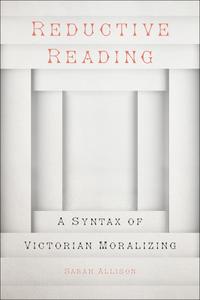
Reductive Reading: A Syntax of Victorian Moralizing by Sarah Allison
English | February 3rd, 2022 | ISBN: 1421425629 | 184 pages | True EPUB | 1.90 MB
"A masterful integration of digital humanistic approaches and more traditional close-reading methods... compelling, persuasive." -Victorian Studies for the 21st Century
"A masterful integration of digital humanistic approaches and more traditional close-reading methods . . . compelling, persuasive." —Victorian Studies for the 21st Century
What is to be gained by reading George Eliot's Middlemarch from an Excel spreadsheet, or the novels of Charles Dickens through a few hundred dialogue tags—those he said/she saids that bring his characters to life? Sarah Danielle Allison's Reductive Reading argues that the greatest gift the computational analysis of texts has given to traditional criticism is not computational at all. Rather, one of the most powerful ways to generate subtle reading is to be reductive; that is, to approach literary works with specific questions and a clear roadmap of how to look for the answers.
Allison examines how patterns that form little part of our conscious experience of reading nevertheless structure our experience of books. Exploring Victorian moralizing at the level of the grammatical clause, she also reveals how linguistic patterns comment on the story in the process of narrating it. Delving into The London Quarterly Review, as well as the work of Eliot, Dickens, Elizabeth Barrett Browning, Anthony Trollope, William Makepeace Thackeray, and other canonical Victorian writers, the book models how to study nebulous and complex stylistic effects.
A manifesto for and a model of how digital analysis can provide daringly simple approaches to complex literary problems, Reductive Reading introduces a counterintuitive computational perspective to debates about the value of fiction and the ethical representation of people in literature.
"A book that promises to transform the way we read novels." —Elsie B. Michie, author of The Vulgar Question of Money




Help Us Grow – Share, Support
We need your support to keep providing high-quality content and services. Here’s how you can help:
- Share Our Website on Social Media! 📱
Spread the word by sharing our website on your social media profiles. The more people who know about us, the better we can serve you with even more premium content! - Get a Premium Filehost Account from Website! 🚀
Tired of slow download speeds and waiting times? Upgrade to a Premium Filehost Account for faster downloads and priority access. Your purchase helps us maintain the site and continue providing excellent service.
Thank you for your continued support! Together, we can grow and improve the site for everyone. 🌐
Related News
-
{related-news}
Comments (0)

Information
Users of Guests are not allowed to comment this publication.
Search
Updates
Partner
» TutBB
» Byte
» Crawli
» Warezomen
» Warez-DDL
» Raidrush
» KATZCD
» Free Ebooks Library
Your Link Here ?
(Pagerank 4 or above)
» Byte
» Crawli
» Warezomen
» Warez-DDL
» Raidrush
» KATZCD
» Free Ebooks Library
Your Link Here ?
(Pagerank 4 or above)