



E-Books →Bilingualism and Bilingual Deaf Education
Published by: Baturi on 13-01-2022, 17:50 |  0
0
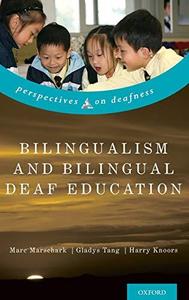
Bilingualism and Bilingual Deaf Education By Marc Marschark, Gladys Tang, Harry Knoors
2014 | 512 Pages | ISBN: 0199371814 | PDF | 2 MB
In Bilingualism and Bilingual Deaf Education, volume editors Marc Marschark, Gladys Tang, and Harry Knoors bring together diverse issues and evidence in two related domains: bilingualism among deaf learners - in sign language and the written/spoken vernacular - and bilingual deaf education. The volume examines each issue with regard to language acquisition, language functioning, social-emotional functioning, and academic outcomes. It considers bilingualism and bilingual deaf education within the contexts of mainstream education of deaf and hard-of-hearing students in regular schools, placement in special schools and programs for the deaf, and co-enrollment programs, which are designed to give deaf students the best of both educational worlds. The volume offers both literature reviews and new findings across disciplines from neuropsychology to child development and from linguistics to cognitive psychology. With a focus on evidence-based practice, contributors consider recent investigations into bilingualism and bilingual programming in different educational contexts and in different countries that may have different models of using spoken and signed languages as well as different cultural expectations. The 18 chapters establish shared understandings of what are meant by "bilingualism," "bilingual education," and "co-enrollment programming," examine their foundations and outcomes, and chart directions for future research in this multidisciplinary area. Chapters are divided into three sections: Linguistic, Cognitive, and Social Foundations; Education and Bilingual Education; and Co-Enrollment Settings. Chapters in each section pay particular attention to causal and outcome factors related to the acquisition and use of these two languages by deaf learners of different ages. The impact of bilingualism and bilingual deaf education in these domains is considered through quantitative and qualitative investigations, bringing into focus not only common educational, psychological, and linguistic variables, but also expectations and reactions of the stakeholders in bilingual programming: parents, teachers, schools, and the deaf and hearing students themselves.
Buy Premium From My Links To Get Resumable Support,Max Speed & Support Me



Links are Interchangeable - No Password - Single Extraction
Help Us Grow – Share, Support
We need your support to keep providing high-quality content and services. Here’s how you can help:
- Share Our Website on Social Media! 📱
Spread the word by sharing our website on your social media profiles. The more people who know about us, the better we can serve you with even more premium content! - Get a Premium Filehost Account from Website! 🚀
Tired of slow download speeds and waiting times? Upgrade to a Premium Filehost Account for faster downloads and priority access. Your purchase helps us maintain the site and continue providing excellent service.
Thank you for your continued support! Together, we can grow and improve the site for everyone. 🌐
Related News
-
{related-news}
Comments (0)

Information
Users of Guests are not allowed to comment this publication.
Search
Updates
Partner
» TutBB
» Byte
» Crawli
» Warezomen
» Warez-DDL
» Raidrush
» KATZCD
» Free Ebooks Library
Your Link Here ?
(Pagerank 4 or above)
» Byte
» Crawli
» Warezomen
» Warez-DDL
» Raidrush
» KATZCD
» Free Ebooks Library
Your Link Here ?
(Pagerank 4 or above)