



E-Books →Calvinist Humor in American Literature
Published by: book79 on 21-06-2026, 21:00 |  0
0
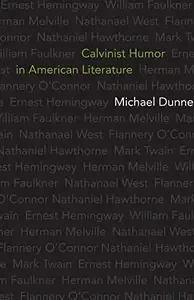
Calvinist Humor in American Literature By Michael Dunne
2007 | 219 Pages | ISBN: 0807132608 | PDF | 2 MB
Though the phrase "Calvinist humor" may seem to be an oxymoron, Michael Dunne, in highly original and unfailingly interesting readings of major American fiction writers, uncovers and traces two recurrent strands of Calvinist humor descending from Puritan times far into the twentieth century. Calvinist doctrine views mankind as fallen, apt to engage in any number of imperfect behaviors. Calvinist humor, Dunne explains, consists in the perception of this imperfection. When we perceive that only others are imperfect, we participate in the form of Calvinist humor preferred by William Bradford and Nathanael West. When we perceive that others are imperfect, as we all are, we participate in the form preferred by Mark Twain and William Faulkner, for example. Either by noting their characters' inferiority, or by observing ways in which we are all far from perfect, Dunne observes, American writers have found much to laugh about and many occasions for Calvinist humor. The two strains of Calvinist humor are alike in making the faults of others more important than their virtues. They differ in terms of what we might think of as the writer/perceiver's disposition: his or her willingness to recognize the same faults in him- or herself. In addition to Bradford, West, Twain and Faulkner, Dunne discovers Calvinist humor in the works of Flannery O'Connor, Herman Melville, Nathaniel Hawthorne, Ernest Hemingway, and many others. For these authors, the world--and thus their fiction--is populated with flawed creatures. Even after belief in orthodox Calvinism diminished in the twentieth century, Dunne discovers, American writers continued to mine these veins, irrespective of the authors' religious affiliations--or lack of them. Dunne notes that even when these writers fail to accept the Calvinist view wholeheartedly, they still have a tendency to see some version of Calvinism as more attractive than an optimistic, idealistic view of life.With an eye for the telling detail and a wry humor of his own, Dunne clearly demonstrates that the fundamental Calvinist assumption--that human beings are fallen from some putatively better state--has had a surprising, lingering presence in American literature.PRAISE FOR THE BOOK"So effective has Dunne made his argument that the reader can move on from here to other American authors and, with this book in hand as a guide, find in their work the presence of Calvinist humor."-M. Thomas Inge, Robert Emory Blackwell Professor of English and the Humanities, Randolph-Macon College 216 pages, 5.5 x 8.5
Buy Premium From My Links To Get Resumable Support,Max Speed & Support Me
Links are Interchangeable - Single Extraction
Help Us Grow – Share, Support
We need your support to keep providing high-quality content and services. Here’s how you can help:
- Share Our Website on Social Media! 📱
Spread the word by sharing our website on your social media profiles. The more people who know about us, the better we can serve you with even more premium content! - Get a Premium Filehost Account from Website! 🚀
Tired of slow download speeds and waiting times? Upgrade to a Premium Filehost Account for faster downloads and priority access. Your purchase helps us maintain the site and continue providing excellent service.
Thank you for your continued support! Together, we can grow and improve the site for everyone. 🌐
Related News
-
{related-news}
Comments (0)

Information
Users of Guests are not allowed to comment this publication.
Search
Updates
Partner
» TutBB
» Byte
» Crawli
» Warezomen
» Warez-DDL
» Raidrush
» KATZCD
» Free Ebooks Library
Your Link Here ?
(Pagerank 4 or above)
» Byte
» Crawli
» Warezomen
» Warez-DDL
» Raidrush
» KATZCD
» Free Ebooks Library
Your Link Here ?
(Pagerank 4 or above)