



E-Books →Galaxy Merger Identification Methods, and Investigations of the Role of Mergers in Galaxy Evolution
Published by: book79 on 28-12-2024, 00:41 |  0
0
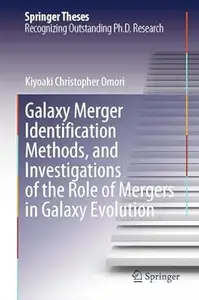
Free Download Galaxy Merger Identification Methods, and Investigations of the Role of Mergers in Galaxy Evolution
English | 2024 | ISBN: 9819787343 | 265 Pages | PDF EPUB (True) | 80 MB
This book offers new findings on the impact of galaxy mergers on galaxy evolution and related processes. Galaxies are astronomical objects composed of stars, gas, and dark matter. The main pathway for galaxy evolution in the currently accepted model for structure growth is through interactions and mergers, or the process in which multiple galaxies interact, collide, and end up as one larger galaxy. Galaxy interactions and mergers are also considered to drive various processes pertaining to galaxy evolution, such as star formation, active galactic nuclei (AGN) activity, and chemical evolution. As such, not only are merging galaxy systems important to understand galaxy structure growth in a cosmological context, they are also unique laboratories to study evolutionary processes taking place in galaxies. However, despite their importance, the relative role of galaxy mergers on galaxy evolution is still heavily contested. One reason for this is difficulty in identifying merger galaxies in observational data. Many different methods have been adopted for merger galaxy identification, but none of them are perfect. Moreover, the use of differing selection methods can result in widely different samples, which can alter statistical results. As such, a novel, robust method for merger identification is required to deepen our understanding of galaxy mergers. In this book, we introduce new methods to identify galaxy mergers from observational data. The first method combines the use of visual identification-both of optical and kinematic images-with spectroscopic pair identification. The second is machine learning based, using a training method called fine-tuning, an application of transfer learning. A pre-trained model on galaxy images is further fine-tuned using a sample of synthetic galaxy images, to make a classifier for merger identification. Using samples identified by our methods, the author conducts three studies: the impact of mergers on galaxy chemical evolution, the effect of galaxy local environment on merging activity, and the connection between mergers and AGN activity. This book is mainly intended for astrophysicists, particularly those studying galaxies, however is open for all to read.
Buy Premium From My Links To Get Resumable Support,Max Speed & Support Me
Links are Interchangeable - Single Extraction
Help Us Grow – Share, Support
We need your support to keep providing high-quality content and services. Here’s how you can help:
- Share Our Website on Social Media! 📱
Spread the word by sharing our website on your social media profiles. The more people who know about us, the better we can serve you with even more premium content! - Get a Premium Filehost Account from Website! 🚀
Tired of slow download speeds and waiting times? Upgrade to a Premium Filehost Account for faster downloads and priority access. Your purchase helps us maintain the site and continue providing excellent service.
Thank you for your continued support! Together, we can grow and improve the site for everyone. 🌐
Related News
-
{related-news}
Comments (0)

Information
Users of Guests are not allowed to comment this publication.
Search
Updates
Partner
» TutBB
» Byte
» Crawli
» Warezomen
» Warez-DDL
» Raidrush
» KATZCD
» Free Ebooks Library
Your Link Here ?
(Pagerank 4 or above)
» Byte
» Crawli
» Warezomen
» Warez-DDL
» Raidrush
» KATZCD
» Free Ebooks Library
Your Link Here ?
(Pagerank 4 or above)