



E-Books →A Rule of Property for Bengal An Essay on the Idea of Permanent Settlement
Published by: book79 on 20-11-2024, 05:50 |  0
0
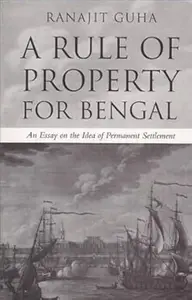
Free Download Ranajit Guha, "A Rule of Property for Bengal: An Essay on the Idea of Permanent Settlement"
English | 2016 | pages: 330 | ISBN: 0822317613, 8178244829 | PDF | 18,4 mb
A Rule of Property for Bengal is a classic work on the history of colonial India. First published in 1963, and long unavailable in this country, it is an essential text in the areas of colonial and postcolonial studies. In this book, Ranajit Guha examines the British establishment of the Permanent Settlement of Bengal-the first major administrative intervention by the British in the region and an effort to impose a western notion of private property on the Bengal countryside. Guha's study of the intellectual origins, goals, and implementation of this policy provides an in-depth view of the dynamics of colonialism and reflects on the lasting effect of that dynamic following the formal termination of colonial rule.
By proclaiming the Permanent Settlement in 1793, the British hoped to promote a prosperous capitalist agriculture of the kind that had developed in England. The act renounced for all time the state's right to raise the assessment already made upon landowners and thus sought to establish a system of property that was, in the British view, necessary for the creation of a stable government. Guha traces the origins of the Permanent Settlement to the anti-feudal ideas of Phillip Francis and the critique of feudalism provided by physiocratic thought, the precursor of political economy. The central question the book asks is how the Permanent Settlement, founded in anti-feudalism and grafted onto India by the most advanced capitalist power of the day became instrumental in the development of a neo-feudal organization of landed property and in the absorption and reproduction of precapitalist elements in a colonial regime.
Guha's examination of the British attempt to mold Bengal to the contours of its own society without an understanding of the traditions and obligations upon which the Indian agrarian system was based is a truly pioneering work. The implications of A Rule of Property for Bengal remain rich for the current discussions from the postcolonialist perspective on the meaning of modernity and enlightenment.
Buy Premium From My Links To Get Resumable Support,Max Speed & Support Me
Links are Interchangeable - Single Extraction
Help Us Grow – Share, Support
We need your support to keep providing high-quality content and services. Here’s how you can help:
- Share Our Website on Social Media! 📱
Spread the word by sharing our website on your social media profiles. The more people who know about us, the better we can serve you with even more premium content! - Get a Premium Filehost Account from Website! 🚀
Tired of slow download speeds and waiting times? Upgrade to a Premium Filehost Account for faster downloads and priority access. Your purchase helps us maintain the site and continue providing excellent service.
Thank you for your continued support! Together, we can grow and improve the site for everyone. 🌐
Related News
-
{related-news}
Comments (0)

Information
Users of Guests are not allowed to comment this publication.
Search
Updates
Partner
» TutBB
» Byte
» Crawli
» Warezomen
» Warez-DDL
» Raidrush
» KATZCD
» Free Ebooks Library
Your Link Here ?
(Pagerank 4 or above)
» Byte
» Crawli
» Warezomen
» Warez-DDL
» Raidrush
» KATZCD
» Free Ebooks Library
Your Link Here ?
(Pagerank 4 or above)