



E-Books →Defining Corruption in the Ottoman Empire Morality, Legality, and Abuse of Power in Premodern Governance
Published by: book79 on 12-11-2024, 13:33 |  0
0
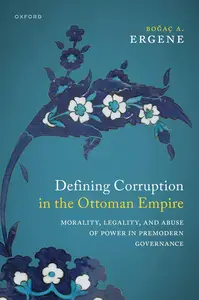
Free Download Defining Corruption in the Ottoman Empire: Morality, Legality, and Abuse of Power in Premodern Governance by Boğaç A. Ergene
English | 9 May 2024 | ISBN: 0198916213 | True EPUB/PDF | 352 pages | 2.5/2.3 MB
How did the premodern Ottomans understand public office corruption? To answer this question, Defining Corruption in the Ottoman Empire explores how Ottoman jurists, statesmen, political commentators, and others characterized this notion and what specific transgressions they associated with it before the nineteenth century. The book is based on extensive research and a wide variety of sources, including jurisprudential texts, imperial orders and communications, chronicles, and travel and diplomatic accounts. It identifies articulations of self-interested abuses of power by official and communal actors in these sources and illustrates how they resonate in some ways with modern perspectives. These premodern formulations, however, are shown to have collectively constituted a conceptual space that was contentious and temporally unstable, and no single overarching term was able to encapsulate all the specific misdeeds frequently linked to modern depictions of corruption.
The book's genre-specific discursive survey is complemented by discussions that highlight, in the Ottoman context, the shifty boundaries that separated legitimate and illegitimate forms of revenue extraction; that examine the state's efforts to monitor and punish abuses by government officials; and that explore the context-dependent and often contested moralities of many acts, such as gift giving as bribery, office selling, and favoritism. It also considers the ways in which "corrupt" state actors might have rationalized their offenses.
Defining Corruption is a conceptually driven work that is both comparative and interdisciplinary, engaging seriously with non-Ottoman historiographies, including broader Middle Eastern, European, and Chinese, and multiple disciplines besides history, in particular anthropology and economics, to provide a comprehensive analysis of premodern Ottoman perceptions of administrative abuse.
Buy Premium From My Links To Get Resumable Support,Max Speed & Support Me
Links are Interchangeable - Single Extraction
Help Us Grow – Share, Support
We need your support to keep providing high-quality content and services. Here’s how you can help:
- Share Our Website on Social Media! 📱
Spread the word by sharing our website on your social media profiles. The more people who know about us, the better we can serve you with even more premium content! - Get a Premium Filehost Account from Website! 🚀
Tired of slow download speeds and waiting times? Upgrade to a Premium Filehost Account for faster downloads and priority access. Your purchase helps us maintain the site and continue providing excellent service.
Thank you for your continued support! Together, we can grow and improve the site for everyone. 🌐
Related News
-
{related-news}
Comments (0)

Information
Users of Guests are not allowed to comment this publication.
Search
Updates
Partner
» TutBB
» Byte
» Crawli
» Warezomen
» Warez-DDL
» Raidrush
» KATZCD
» Free Ebooks Library
Your Link Here ?
(Pagerank 4 or above)
» Byte
» Crawli
» Warezomen
» Warez-DDL
» Raidrush
» KATZCD
» Free Ebooks Library
Your Link Here ?
(Pagerank 4 or above)